
 By
By 
Starting an export business from India was not something I understood in one day. When I started, I had many questions and very little practical knowledge about how international trade actually worked.
Over the last 3 years of working in the export business, I have learned through research, practical experience, conversations with suppliers and buyers, and, most importantly, through my own mistakes.
In the beginning, I made mistakes that could have been avoided if I had understood the export process properly. I learned that exporting is not simply about buying a product at a low price and selling it to a buyer in another country. There is much more involved—choosing the right product, understanding international demand, finding reliable suppliers, calculating the right price, finding genuine buyers, handling export documents, managing logistics, and making sure payments are received safely.
That is why I decided to share my export journey through InsideExport.
In this article, I will explain how I started my export business from India, step by step, including what I learned at the beginning, the mistakes I made, and the lessons that helped me understand the business better.
Step 1: First, I Learned About the Export Business
Before registering my business, I started with the basics.
My first questions were:
- What exactly is an export?
- How does an export transaction work?
- Why do businesses export?
- Which Indian products have demand in other countries?
- Which countries import products from India?
- How does international trade benefit India?
- What support does the government provide to exporters?
This research helped me understand that exporting is an important part of India’s economy.
I also started looking at how India’s exports have developed over the years and how Indian businesses are reaching customers in different parts of the world.
Why I Think Learning Comes Before Investing
One of the biggest lessons I learned was:
Don’t start by spending money. Start by learning.
Before investing heavily in products, warehouses or shipments, I wanted to understand the complete export process.
I believe a beginner should first understand the business model and then start building the business step by step.
Step 2: I Chose a Perfect Business Name Because

Once I became serious about starting the business, one of my first practical decisions was choosing the business name.
I wanted a name that was:
- Easy to pronounce
- Easy to remember
- Easy to write
- Professional
- Suitable for international customers
- Flexible enough to work with different products
This is especially important for an export business because your customers may come from countries where English pronunciation and spelling are different from your local language.
My Approach to Choosing a Name
I didn’t want a complicated name that customers would struggle to pronounce or remember.
My thinking was simple:
If a buyer hears my company name once, they should be able to remember and pronounce it easily.
A simple and professional name can also make communication easier when dealing with international buyers, freight forwarders, banks and other business partners.
Step 3: I Completed My Basic Business Registrations

After deciding on the business structure and name, I moved toward the basic registrations required to operate the business.
Depending on the business structure and circumstances, this can include:
- PAN
- Business registration
- Udyam/MSME registration, where applicable
- GST registration, where applicable
- Business bank account
For my process, documents such as PAN, Aadhaar and address-related documents, including electricity/address proof where required, were part of the registration process.
Why I Completed the Basics First
I didn’t want to jump directly into international trade without first establishing the business properly.
The basic setup gives you a foundation for:
- Banking
- Invoicing
- Tax compliance
- Business transactions
- Export documentation
- Working with buyers and logistics companies
Important: The exact registrations and documents can vary depending on your business structure, product and applicable tax rules. A beginner should always verify the current requirements before applying.
Step 4: I Opened a Current Account
After completing the necessary business setup, I opened a current account for business transactions.
For an export business, having a proper business banking arrangement is important because international business involves receiving and making business payments and maintaining proper transaction records.
A dedicated business account also makes it easier to separate personal and business finances.
My Simple Rule
Keep your business money and personal money separate from the beginning.
It makes accounting, record keeping and future business growth much easier.
Step 5: Then I Applied for IEC
After setting up the basic business structure, I moved to one of the most important steps for international trade: the Importer Exporter Code (IEC).
The IEC is issued by the Directorate General of Foreign Trade (DGFT) and is generally required for businesses undertaking import or export activities, subject to applicable exemptions.
For a new exporter, understanding IEC is essential because it connects your business with the formal import-export system.
Why IEC Matters
Before starting your first commercial export, you should understand:
- What IEC is
- Who needs it
- How to apply
- What information is required
- How to keep your IEC details updated
I learned that getting the basic registrations completed first made the next steps much easier to understand.
Step 6: I Learned About the Documents Required for Export
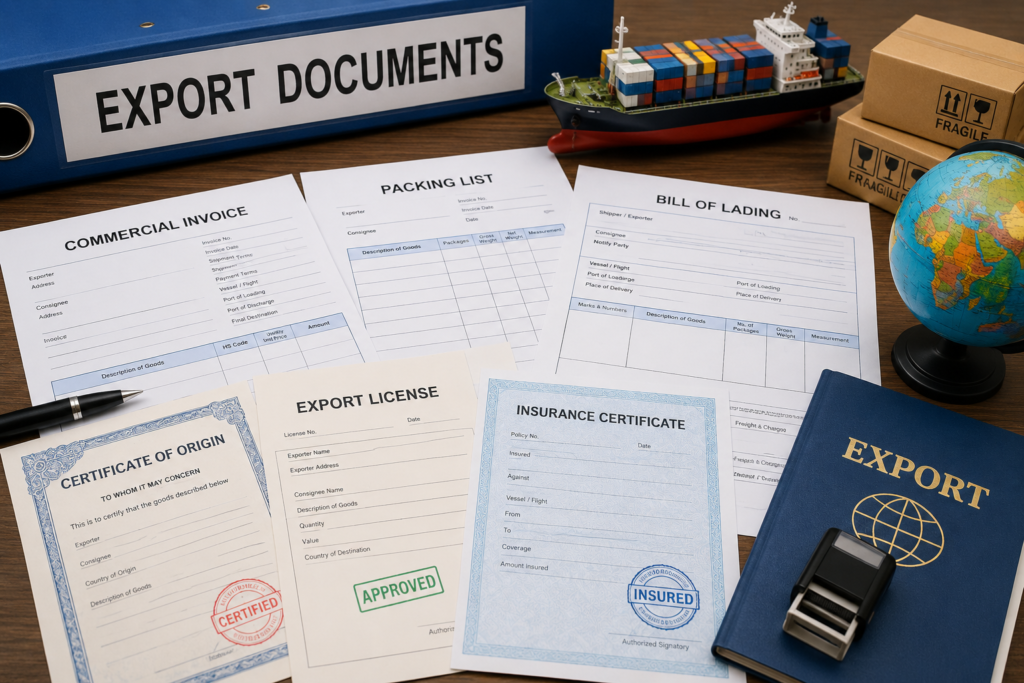
After understanding IEC, I started learning about the documents used during an actual export transaction.
This was an important stage because international trade involves much more documentation than a normal domestic sale.
Some common export documents can include:
- Commercial Invoice
- Packing List
- Shipping Bill
- Bill of Lading or Air Waybill
- Certificate of Origin, where required
- Product-specific certificates or approvals, where applicable
- Other documents required by the destination country or buyer
Start With the Basics
I realized that beginners shouldn’t try to memorize every document immediately.
Instead, first understand:
What is the document?
Who prepares it?
When is it required?
Who checks it?
Why is it needed?
Once you understand these five questions, export documentation becomes much easier.
Product-Specific Documents
One important lesson I learned is that there is no single document list that applies identically to every product and every country.
For example, food, agricultural, pharmaceutical, chemical and other regulated products may have additional requirements.
Therefore, before accepting an export order, I believe you should always check both:
Product requirements + Destination-country requirements
Step 7: Then I Started Looking for the Right Product
After understanding the basic export structure, I moved toward one of the most important decisions:
What should I export?
Instead of selecting a product simply because it was popular, I started thinking about availability, pricing, quality and logistics.
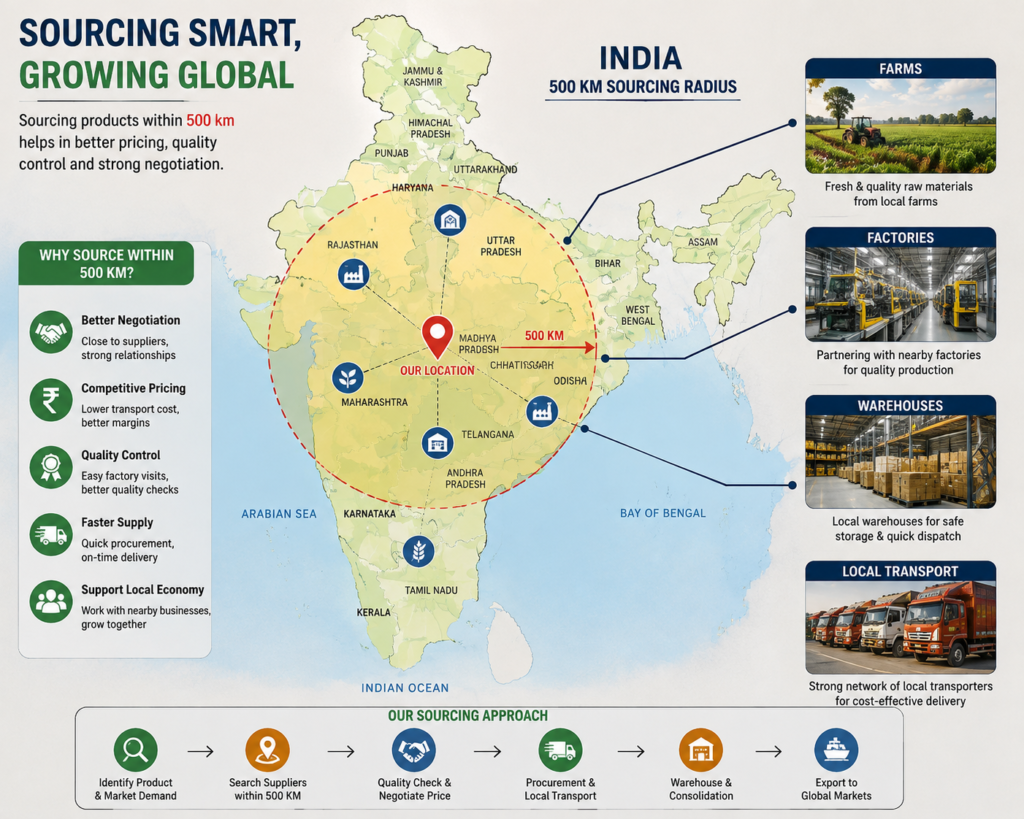
One of the most important strategies I followed was looking for products that were available within approximately a 500-kilometre radius of my operating area.
Why I Preferred Products Available Near Me
This approach has several potential advantages.
1. Easier Supplier Access
If suppliers are relatively close, it becomes easier to visit them, inspect products and build relationships.
2. Lower Transportation Costs
Long-distance transportation can increase your product’s landed cost.
If your product is available closer to you, you may have more control over transportation expenses.
3. Better Negotiation
When you have access to multiple suppliers in a nearby region, you can compare:
- Price
- Quality
- Quantity
- Packaging
- Delivery time
This can give you stronger negotiating power.
4. Faster Procurement
If a buyer suddenly needs additional quantity, having suppliers relatively close to your business can make procurement easier.
5. Better Quality Control
When the supplier is nearby, you can visit, inspect and communicate more easily.
Step 8: I Focused on Competitive Pricing
Finding a product is not enough.
The next question is:
Can I source this product at a price that allows me to compete internationally?
I started comparing prices from different suppliers instead of depending on a single supplier.
I looked at:
- Product quality
- Wholesale price
- Minimum order quantity
- Packaging
- Transportation cost
- Availability
- Seasonal price changes
- Payment terms
The goal was not simply to find the cheapest product.
The goal was to find the right combination of quality and price.
Step 9: I Started Building Relationships With Logistics Companies
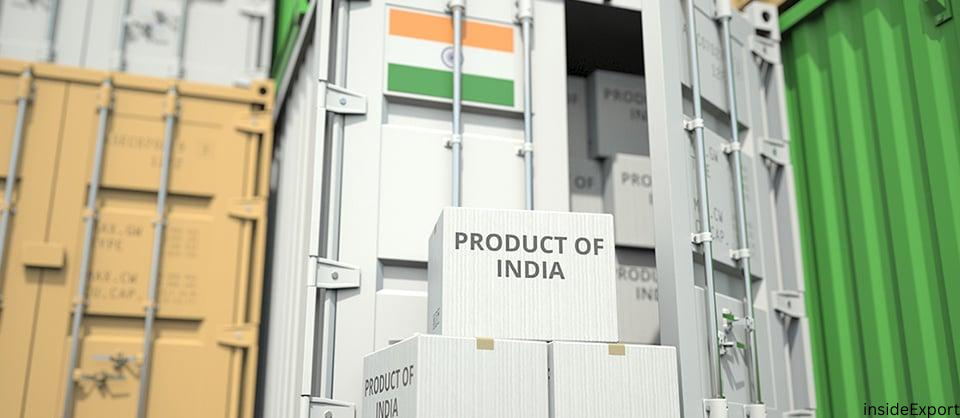
Another important lesson I learned is that an exporter should not think only about the product.
Logistics can directly affect your final export price.
So, alongside product sourcing, I started connecting with logistics companies, freight forwarders and local transporters.
Why Local Transporters Matter
If your product is sourced from another city or district, you need to move it to your warehouse, packing location, port, airport or another logistics point.
Therefore, I wanted to compare prices from different local transporters.
Why Freight Forwarders Matter
A good freight forwarder can help an exporter understand areas such as:
- Freight options
- Shipping schedules
- Documentation
- Customs-related coordination
- Port procedures
- Destination delivery arrangements
My approach was simple:
Don’t wait until you receive an export order to start searching for logistics partners. Build those relationships early.
Step 10: I Did Not Try to Target the Whole World
This was one of the most important lessons in my export journey.
When someone starts thinking about international business, it is easy to say:
“I want to sell my product worldwide.”
But for a beginner, I don’t think this is always the best approach.
Instead, I believe it is better to start by selecting one or two countries.
Why I Would Target Only One or Two Countries
H3: Easier Market Research
If you target 20 countries at once, you have to research 20 different markets.
But if you focus on one or two countries, you can learn much more about those markets.
You can research:
- Demand
- Competitors
- Importers
- Prices
- Regulations
- Shipping costs
- Buyer preferences
H3: Easier Buyer Search
Instead of searching for buyers everywhere, you can build a focused database of importers in one or two countries.
For example:
India → UAE
or
India → USA
Then you can concentrate your outreach.
H3: Easier Logistics Planning
Focusing on fewer destinations also helps you understand shipping routes, freight costs and delivery procedures more efficiently.
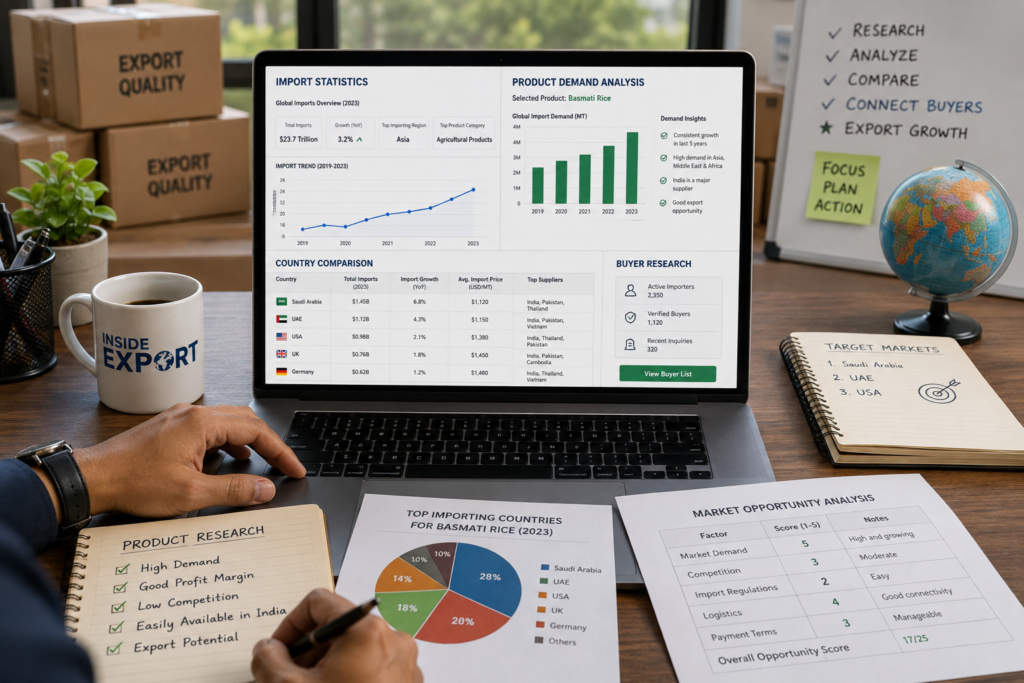
Step 11: I Chose Countries That Already Import My Product
Choosing a country simply because it is a large economy isn’t enough.
The most important question should be:
Does this country actually import my product in significant quantities?
If I am exporting a particular product, I first want to identify countries where there is already strong demand or significant imports for that product.
This reduces the risk of trying to create demand from zero.
My Basic Country Selection Process
I would look at:
Product → Countries importing the product → Import volume → Competition → Regulations → Logistics → Buyer availability
Only after considering these factors would I choose my target market.
Step 12: I Considered the Documentation Requirements of the Target Country
This is another important lesson for a new exporter.
A country may have strong demand for your product, but that does not automatically mean it is the best market for your first shipment.
Some countries or products can involve more complex compliance, certifications, testing or documentation.
For a beginner, I would first understand:
- What documents are required?
- Are additional certificates required?
- Does the product need testing?
- Are there labeling requirements?
- Are there packaging requirements?
- Are there special import permits?
- What does the buyer require?
Start Simple, Then Expand
My thinking is:
For your first export market, understand the requirements before committing to an order.
If one market requires significantly more documentation and compliance than another market with similar demand, a beginner may prefer the simpler market—provided it is commercially suitable and legally compliant.
This doesn’t mean avoiding countries with strict standards forever.
It means learning the business step by step.
My Export Business Strategy in One Simple Picture
My approach can be summarized like this:
Learn Export Business
↓
Choose a Simple Business Name
↓
Complete Business Registrations
↓
Open Current Account
↓
Get IEC
↓
Understand Export Documents
↓
Find Products Within a Practical Sourcing Radius
↓
Compare Suppliers & Negotiate
↓
Build Logistics & Transport Relationships
↓
Select 1–2 Target Countries
↓
Check Product Demand & Import Volume
↓
Check Country Requirements
↓
Find International Buyers
↓
Start Your First Export Order
What I Learned From This Process
Starting an export business taught me that success doesn’t begin with finding a foreign buyer.
It begins much earlier.
It begins with learning.
Then comes the right business setup, the right product, the right suppliers, the right logistics partners and finally the right international market.
I also learned that trying to target the entire world from day one can make the business unnecessarily complicated.
For a beginner, a more practical approach can be:
One product + one or two countries + a reliable supply chain + focused buyer research.
Once you understand that market and successfully complete your initial transactions, you can gradually expand into other countries and products.
What I Would Recommend to Someone Starting Today
If I were starting again from zero, I would follow this sequence:
- Learn how export business works.
- Understand government regulations and available support.
- Choose a simple, professional business name.
- Complete the applicable business registrations.
- Open a current account.
- Obtain IEC.
- Understand the documents required for your product.
- Identify products available within a practical sourcing radius.
- Build relationships with multiple suppliers.
- Negotiate competitive sourcing prices.
- Connect with local transporters and freight forwarders.
- Select one or two countries.
- Confirm that those countries import your product.
- Study their requirements.
- Start looking for genuine buyers.
- Begin with a manageable order and learn from every transaction.
Final Thoughts
My export journey did not start with a container leaving an Indian port.
It started with learning.
I first wanted to understand the business, then I built the basic foundation, studied products and suppliers, developed logistics connections and finally started thinking about international buyers.
That is the approach I want to share through InsideExport—not just theory about international trade, but the practical lessons I learn while building an export business from India.
If you are also thinking about starting an export business, don’t feel that you need to understand everything on the first day.
Learn one step. Complete it. Then move to the next.
That is how I approached my export journey, and that is how I believe a beginner can make international trade easier to understand.
1 Comment